A hero with a meaningful wish
Start with a desire your reader can understand. A clear motive makes each magical encounter part of the story rather than a disconnected surprise.
Your next story Explore the credit plans for your next creative project.
 Toonbee AI
Build an original fairy tale around a hero, a wish and a little magic. Create illustrated scene ideas and short cartoon clips with Toonbee AI.
Short watercolor-style cartoon scene: a small red fox in a teal scarf takes one careful step up a grassy hill carrying a glowing star in a wooden basket. A silver moth hovers beside the lantern-lit path; a sleepy village rests below. Gentle midnight blues, fixed camera, no lettering.
A strong fairy tale begins with someone wanting something: a fox wants to return a borrowed star, or a baker needs to wake a sleeping town. Give that wish a cost, a helper and a decision that changes the hero.
Use Toonbee AI to explore the visual world one scene at a time. Keep a short character description beside your story, then reuse the same appearance, palette and magical rules as you create new illustrations or short clips.
Start with a desire your reader can understand. A clear motive makes each magical encounter part of the story rather than a disconnected surprise.
Decide what the enchanted object can do and what it cannot. Limits create useful obstacles and make the final solution feel earned.
Repeat the hero's outfit, signature prop and setting details across scene briefs to give your fairy tale a coherent visual direction.
Name your hero, the problem and the reader's age. Decide whether the adventure should feel funny, mysterious or reassuring.
Describe the departure, the hardest choice and the return. Check that the hero solves the problem through an action of their own.
Generate artwork for the key moments, compare the character details and revise any scene that contradicts your story.
A tiny moth might read moonlit maps while the hero carries the lantern. Complementary abilities give companions a reason to travel together.
A staircase that changes at dusk or a forest that forgets names can shape the plot. Introduce the rule before the hero needs to use it.
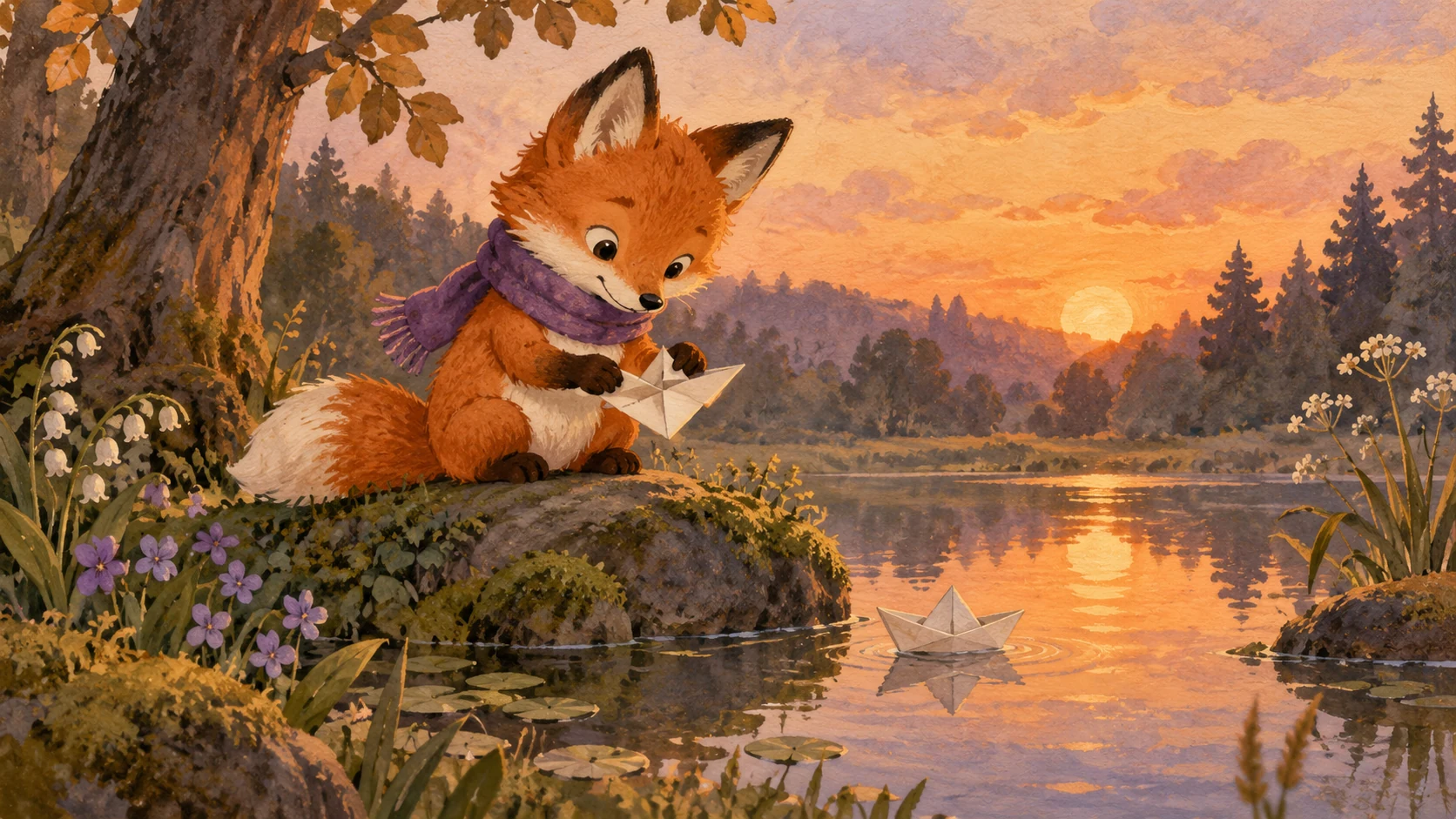
Watercolor suits a gentle woodland tale; cut-paper shapes can make a lively folk story. Describe materials and lighting instead of naming a studio.

Show the hero sharing the last seed or admitting a mistake. A visible choice usually carries a theme more clearly than a closing lecture.
Select a few moments with clear movement and generate them separately. Arrange the clips with your own narration and editing if you want a finished story video.

Original illustrative artwork and authored briefs show possible creative directions. Review the actual result from your selected workflow before sharing it.
Short watercolor-style cartoon scene: a small red fox in a teal scarf takes one careful step up a grassy hill carrying a glowing star in a wooden basket. A silver moth hovers beside the lantern-lit path; a sleepy village rests below. Gentle midnight blues, fixed camera, no lettering.
Short cut-paper-style animation of an elderly clockmaker kneeling beside a child in a courtyard. The clockmaker places one copper seed into a small hole in the soil while the child watches with curiosity. Warm sunrise palette, readable silhouettes, fixed medium shot, no text.
Short soft-gouache-style cartoon scene of a young otter slowly offering a polished pebble to a gentle lake spirit at the water edge. Reeds sway slightly around the characters. Keep their designs stable, one clear offering action, no text.
Build an original fairy tale around a hero, a wish and a little magic. Create illustrated scene ideas and short cartoon clips with Toonbee AI.